



Concrete Finishes
Microcement & Concrete Finishes
A seamless, hand-troweled concrete look for floors, walls, showers and countertops, applied in thin layers over the surface you already have. No demolition. Anchored by Concretta from Meoded.
Meoded Concretta: coverage, steps and sealers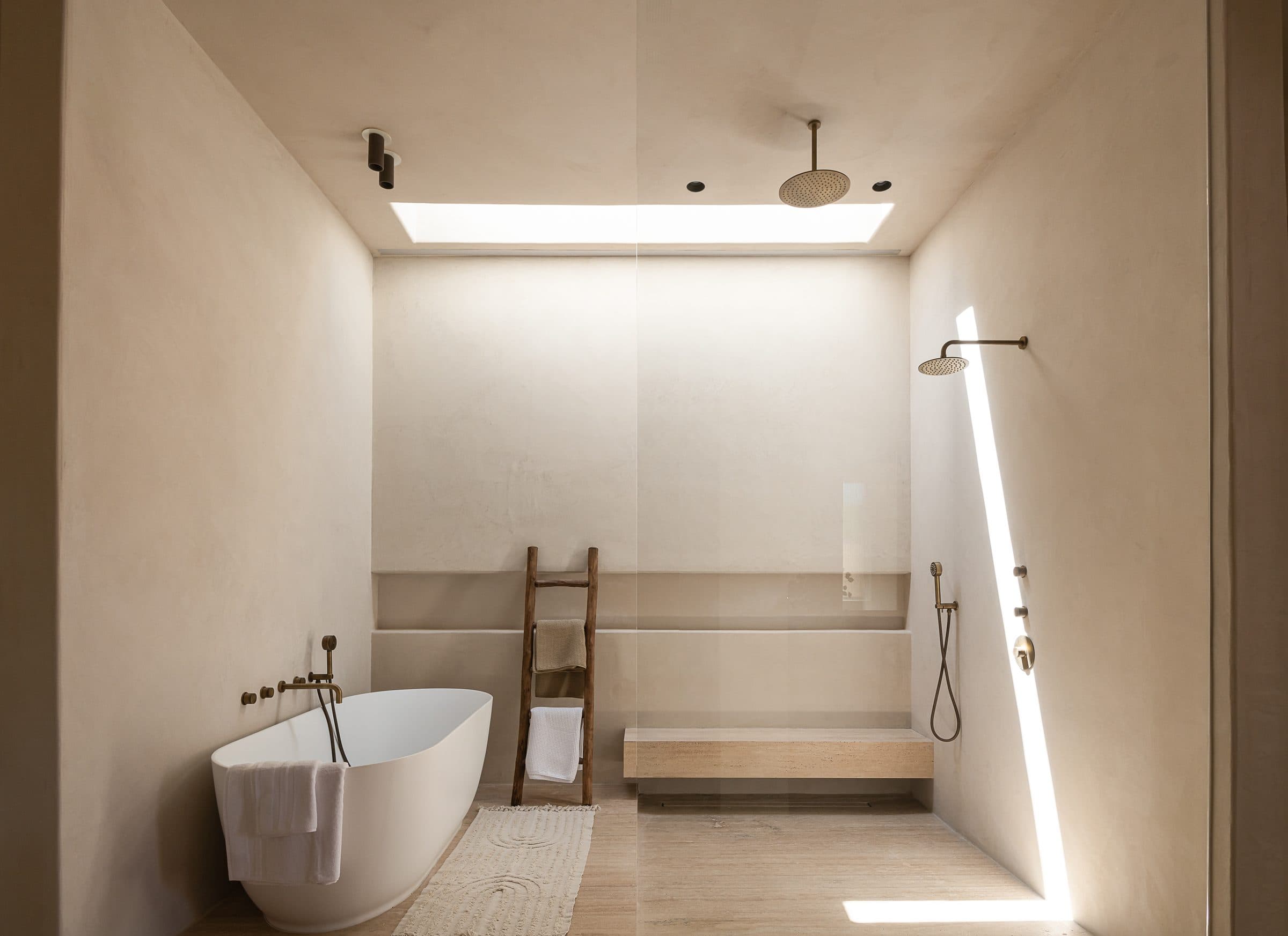
Microcement is a thin cement-based coating troweled by hand over existing surfaces to create a continuous, seamless concrete look without grout lines or joints. Concretta bonds directly to sound existing tile and over a primer on new construction, so it goes onto floors, walls and countertops without the demolition, weight, or downtime of poured concrete. Properly sealed, it stands up to wet areas and daily use. At Arizona Paint Supply, Concretta from Meoded is one of our three most-requested specialty finishes, alongside lime wash and Moroccan Clay, and our staff can walk you through the full system before you start.
The Basics
What microcement is, and is not
Microcement (also called micro-topping or micro-screed) is a cement-based coating applied in thin, troweled layers. Total build is a few millimeters, thin enough to go over existing floors, walls, and tile without raising heights or adding meaningful weight.
It is not poured concrete, and it is not epoxy. Poured concrete is a structural slab measured in inches; microcement is a surface finish measured in millimeters that bonds to a substrate you already have. Epoxy is a self-leveling resin that is poured and flows flat, typically with a glossy, plastic-looking finish; microcement is hand-applied with a trowel, leaving the subtle movement and matte, mineral character of real concrete.
- Thin overlay, not a structural slab
- Hand-troweled for natural movement, not poured flat like epoxy
- Bonds over existing floors, walls, tile, and countertops
- A matte, mineral concrete look with no grout lines or seams
The System
How a microcement finish is built
Microcement is a layered system, and the prep and the sealer matter as much as the cement. The surface is cleaned and stabilized. New construction gets Meoded Quartz Primer first, and in a shower the wall is waterproofed before that; Concretta goes directly over sound existing tile without a primer. Over tile, Meoded sands the tile lightly and sets a fine fiberglass mesh into the first coat for stability.
Concretta goes on in two thin troweled coats and cures at least 72 hours. The system is then sealed. The sealer provides the water, stain and abrasion resistance, and it is not optional. Shower walls get three to four coats of Meoded PlasterGuard; floors and countertops get one coat of PlasterGuard and two of PlasterSeal Plus.
- Prep & stabilize the substrate
- Quartz Primer on new construction; none needed over tile
- Fine fiberglass mesh over tile
- Two thin troweled coats, 72 hours to cure
- PlasterGuard on walls; PlasterGuard + PlasterSeal Plus on floors and counters
Wet Areas
Showers, bathrooms, and water resistance
Microcement is most often chosen for the seamless wet-area look: a shower or bathroom with no tile grid and no grout lines to scrub. Concretta in particular is a water-resistant cement-and-limestone plaster made for showers, tub surrounds, backsplashes, and countertops.
Water resistance comes from the sealer system, not the cement alone, and Concretta is only the finish layer: on new walls, the shower is waterproofed underneath before it goes on. Shower walls then get three to four coats of PlasterGuard, with 24 to 48 hours before the shower is used, and clear silicone goes where the wall meets the floor and around fixtures. Done correctly, microcement performs in wet areas while keeping that continuous, modern surface.
- Seamless showers and tub surrounds with no grout lines
- Concretta is formulated for wet and humid areas
- Water resistance depends on the correct sealer system
- Waterproof new shower walls first; Concretta is the finish layer
Color & Finish
Color, texture, and the desert-contemporary look
Microcement is tintable, so the palette runs well beyond the color of raw cement, from light to deep. The finish is typically matte with subtle hand-troweled movement. It suits the warm, minimal interiors common here.
Concretta is zero VOC, with a matte, smooth surface and subtle movement. Because the look is continuous from floor to wall to vanity, it is a common choice for indoor-outdoor living in modern Phoenix and Scottsdale homes.
- Tintable from light to deep, including custom colors
- Matte finish with natural troweled movement
- Zero VOC (Concretta)
- Suits desert-contemporary and warm-minimalist design
Living With It
Durability and maintenance
A well-installed, well-sealed microcement surface is made for daily life: spills, splashes and use. Meoded positions Concretta for walls, showers, countertops and low-traffic floors. The sealer carries the wear, so the maintenance story is mostly about the sealer.
Routine care is simple: clean with a pH-neutral cleaner and a soft cloth or mop, and avoid harsh abrasives that attack the topcoat. Meoded puts resealing at every two to five years, depending on use and exposure: sooner on floors and showers, longer on low-traffic walls.
- Sealer takes the wear
- Clean with pH-neutral cleaners and soft cloths
- Reseal every 2–5 years (Meoded), sooner on floors and showers
- Long service life when maintained
At a glance
- Type
- Cement-and-limestone microcement (thin overlay)
- Coats
- Two thin troweled coats
- Main product
- Concretta by Meoded
- Application
- Hand-troweled: Quartz Primer on new construction (none over tile), two coats, seal
- Reinforcement
- Fine fiberglass mesh over tile
- Coverage
- About 14–20 sq ft per gallon (10 lb) for two coats
- Substrates
- Tile, marble, stone, drywall, backer board, countertops
- Finish
- Matte and seamless; final sheen set by the sealer
- VOC
- Zero VOC (Concretta)
- Sealers
- PlasterGuard (walls); PlasterGuard + PlasterSeal Plus (floors, counters)
- Maintenance
- pH-neutral cleaning; reseal every 2–5 years
Typical uses: Low-traffic floors: seamless concrete look over existing tile, sealed with PlasterSeal Plus · Walls & ceilings: continuous feature walls and warm-minimalist interiors · Showers & tub surrounds: grout-free wet areas with the right sealer system · Countertops & backsplashes: monolithic concrete-look surfaces · Fireplaces and built-ins: shower benches, niches and surrounds
Questions we hear at the counter
Can microcement go over my existing tile or floor?
Yes. It is one of its main advantages. Concretta bonds directly to sound existing tile, marble and stone with no primer, so most projects skip demolition. The grout is scrubbed clean, the tile is sanded lightly with 60-grit paper, and a fine fiberglass mesh goes into the first coat. New construction gets Meoded Quartz Primer first.
Is microcement waterproof enough for a shower?
Microcement is well suited to showers and bathrooms when the full system is done right. Water resistance comes from the sealer, not the cement alone: three to four coats of PlasterGuard on Concretta shower walls. On new walls, waterproof the shower first; Concretta is the finish layer. Concretta is specifically formulated as a water-resistant plaster for wet and humid areas.
How is microcement different from epoxy?
Epoxy is a self-leveling resin that’s poured and flows flat, usually with a glossy, plastic look, and it’s prized for chemical and heavy-load resistance. Microcement is hand-troweled cement applied in thin layers with a matte, natural concrete character. They’re different materials for different looks and uses.
Is it the same as polished or poured concrete?
No. Poured concrete is a structural slab measured in inches and adds significant weight and downtime. Microcement is a surface finish measured in millimeters that bonds to surfaces you already have. The look is the same, with far less demolition and load.
What colors does microcement come in?
It is tintable well beyond the color of raw cement, from light to deep, including custom tints. The finish is matte with subtle troweled movement, and it suits Arizona’s desert-contemporary and warm-minimalist interiors.
How durable is it, and how do I maintain it?
Sealed Concretta handles spills and daily use on walls, showers, counters and low-traffic floors. Clean it with pH-neutral cleaners and soft cloths, avoid harsh abrasives, and reseal every two to five years, as Meoded recommends: sooner on floors and showers, longer on low-traffic walls.
Do I need a primer and sealer, or just the cement?
Microcement is a complete system. New construction gets Meoded Quartz Primer (Concretta needs none over sound tile, but gets a fine fiberglass mesh), and the sealer delivers the water, stain, and abrasion resistance, so it is never optional. Concretta pairs with PlasterGuard on walls, and PlasterGuard plus PlasterSeal Plus on floors and countertops. Our staff can spec the right system for your surface.
Made for the Valley
Arizona Paint Supply stocks and supports microcement and concrete finishes at our North Scottsdale store, led by Concretta from Meoded. For a Scottsdale shower, a vanity or a desert-contemporary kitchen, our team will spec the full primer, body and sealer system and talk through the preparation before you buy.
Concrete finishes & microcement
Concretta for showers, counters and low-traffic floors, with PlasterGuard and PlasterSeal Plus. For walls, Meoded’s Vega and Golmex give stone and concrete looks. Call or visit for stock and color help.
Meoded Concretta: coverage, steps and sealers